How to Read Soil Colour Without Misjudging the Ground
Soil colour can mislead on its own. Learn how texture and a careful profile check sharpen your reading before you judge drainage or planting suitability.
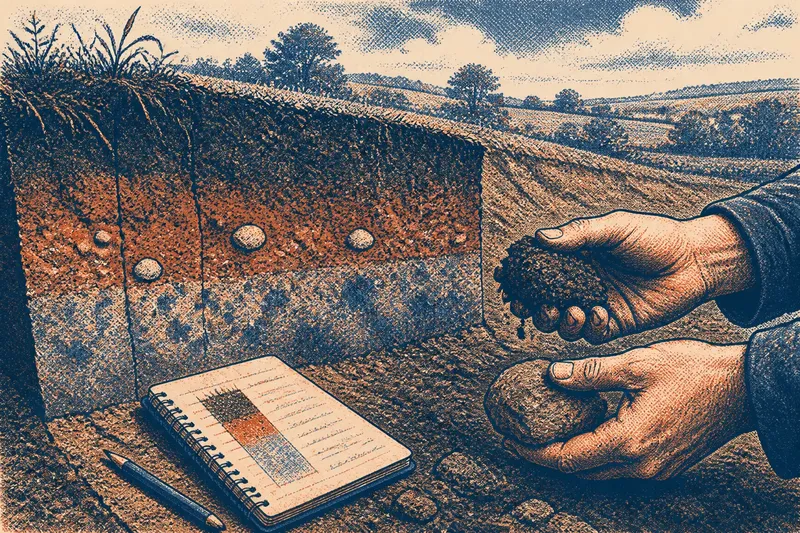
Soil colour can mislead you if you use it to judge drainage or planting suitability. A dark patch may contain organic material, yet colour alone cannot tell you whether roots have enough air or water, or what lies beneath the surface.
Read colour as a description, then check the exposed profile and texture before making a practical decision. Like a label on a jar, a shade offers a useful first clue but does not reveal everything inside.
What colour tells you
Dark brown or black surface soil can indicate accumulated organic material. Pale grey areas may point to periods of limited air movement, while reddish and yellowish shades can reflect iron compounds altered by soil conditions.
These clues are not diagnoses. A dark layer may be thin over gravel or dense clay. Red soil does not prove that water moves freely through every layer. Recent rain, moisture and lighting can also alter the colour you see.
Describe the shade and where it changes. Note the boundary between the dark surface and the material below, but avoid assigning a cause from colour alone.
Check the soil texture
Texture describes the relative feel of sand, silt and clay. Compare a small sample from an already exposed patch. Sandy material feels gritty and falls apart; clay-rich material can feel smooth or sticky when damp and may hold together as a lump. Silt often feels silky or floury. Do not dig into protected or sensitive ground.
Texture gives a broad clue about how water and roots may move, not a verdict on drainage or planting suitability. Coarse material often lets water pass more readily, while fine clay can retain water. But cracks, aggregates, compaction and layers beneath the sample can change the result. A surface handful cannot establish how the whole soil profile behaves.
If the decision concerns planting, drainage or access, treat a hand-texture check as an initial observation only. A soil profile assessment or advice from a qualified local soil professional may be needed where the consequences matter.
Read the soil profile
An exposed profile can show whether the surface shade continues downwards or gives way to a different layer. Look for abrupt boundaries, visible stones, compact material and grey or rusty mottling. Each is a clue to record, not proof of a particular drainage condition.
Compare observations from similar positions and note recent disturbance or weather. A layer may appear wet after rain without remaining wet through other conditions. Likewise, a firm surface does not reveal whether deeper material restricts roots or water.
Which soil clues matter?
Can dark soil be unsuitable for planting?
Yes. Dark colour does not establish that roots have enough air, water or usable nutrients. Check the texture and visible layers, and seek a fuller assessment if planting success matters.
Does red soil mean good drainage?
No. Red or yellow tones can relate to iron compounds, but they do not show how every layer lets water pass. Dense material below the surface may still limit drainage.
What can grey soil indicate?
Grey or mottled colour can be a clue to periods of saturation or limited air movement. Record where it occurs in the profile, but do not treat the shade as a stand-alone diagnosis.
When is a hand-texture check enough?
It can help distinguish broad differences between exposed samples, such as gritty material and sticky fine soil. It is not enough to certify drainage, root conditions or suitability for a consequential project.
Use a field check
- Check whether the sample is from an exposed, permitted patch; if access is unsuitable, do not take it and use an existing exposure instead.
- Check the soil colour in natural light; if it changes after wetting or drying, record both appearances rather than assigning one fixed shade.
- Check whether the dark surface layer continues into the profile; if it ends abruptly, record the boundary and avoid assuming the whole soil is dark or uniform.
- Check the sample for grit, smoothness or stickiness when damp; if the feel is unclear, record it as uncertain rather than naming a texture class.
- Check for visible cracks, roots, stones or compact layers; if these occur, note them because a simple texture reading may not describe water movement through the profile.
- Check for grey or rusty mottling below the surface; if present, treat it as a reason for closer assessment, not proof of poor drainage.
- Check whether your decision affects planting, drainage works or safe access; if it does, seek qualified local advice before acting, while for low-stakes comparison keep the observation descriptive.
Work through a comparison
Imagine you are comparing two fictional exposed patches after recent rain. At Patch A, the surface is dark and the sample feels gritty; the dark layer ends above visible stones. At Patch B, the surface is also dark, but the sample feels sticky and grey mottling appears beneath it. These invented observations do not establish either patch’s suitability or drainage performance.
First, record the shared dark surface without treating it as evidence that the sites are alike. Next, write down the differences in feel and profile: Patch A has grit and a stony boundary, while Patch B has sticky material and mottling. Then decide what the comparison can support: it shows that the exposed materials differ, but it cannot determine how either site will perform for planting or drainage. If that decision matters, arrange a fuller local assessment.
For a reliable first reading, keep observations separate from conclusions. The search phrase how to read soil colour is best answered by checking shade, texture and visible layers together, then leaving drainage and planting claims open until the evidence supports them.